For commercial and multifamily developers, financing a project today often requires two things: more time and more creativity.
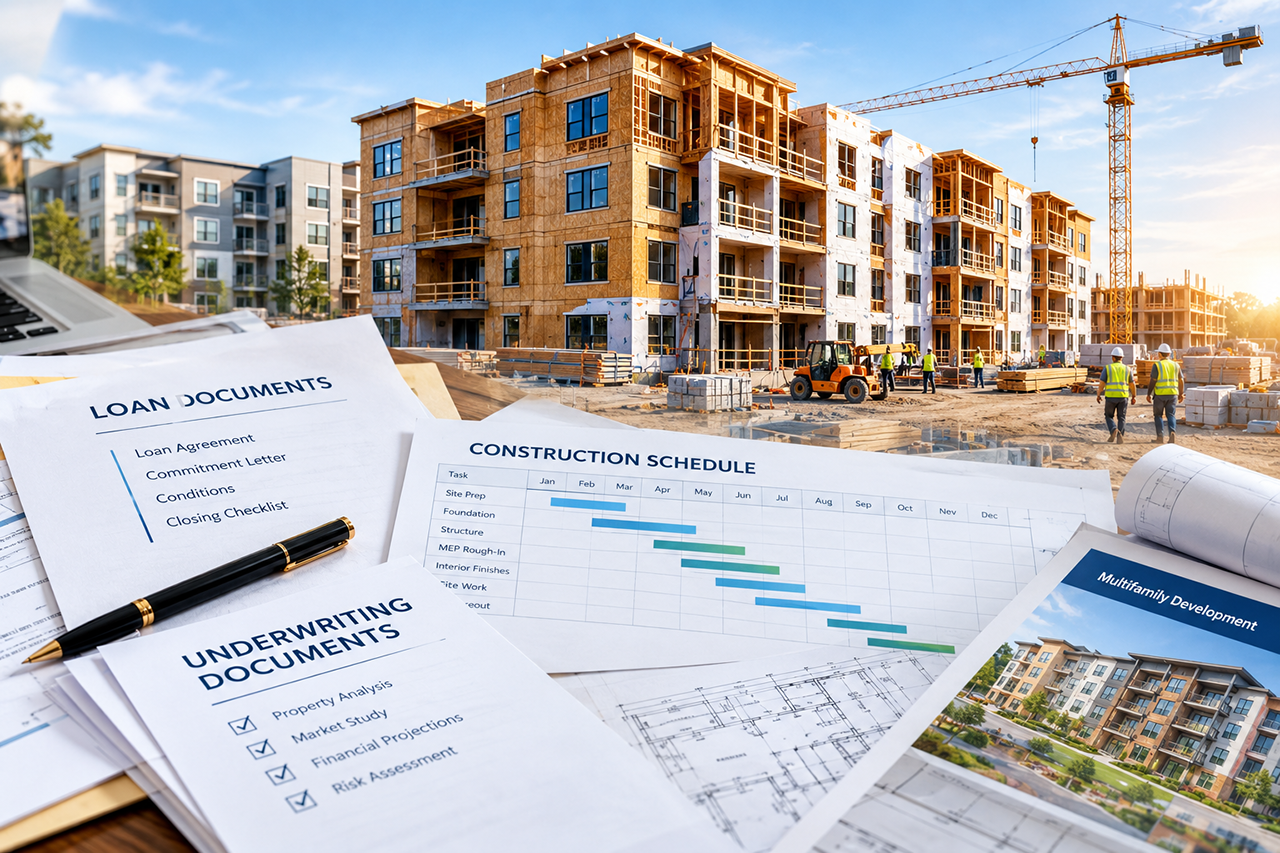
Capital is available, but lenders are taking a closer look at deals. Underwriting is more rigorous, approvals can take longer, and developers are being asked to provide greater certainty around costs, schedules, contingencies, and project risk.
The upside? For well-positioned projects, taking more time to secure financing can create opportunities to negotiate more favorable terms and build a capital structure that better supports the development.
The question is “What is the right financial stack to move the project forward?”
A More Strategic Capital Stack
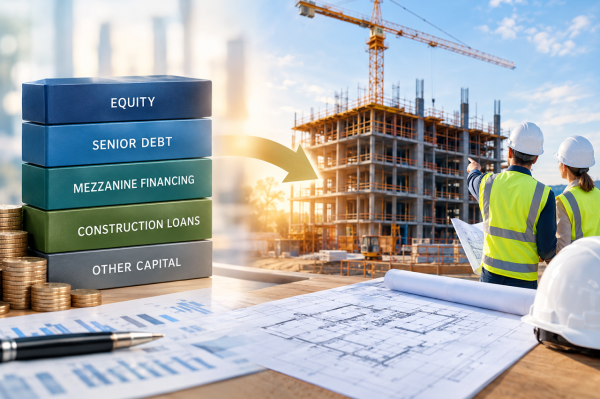
Traditional construction debt may still form the foundation of a project, but developers are increasingly evaluating a wider range of financing options.
Depending on the development, that could include senior construction debt, preferred equity, mezzanine financing, private credit, joint venture equity, bridge financing, public incentives, tax credits, and government-backed programs.
For multifamily developers, HUD/FHA financing such as Section 221(d)(4) may also be part of the conversation. Designed for new construction and substantial rehabilitation of multifamily rental properties, the program can provide construction-to-permanent financing with long-term amortization. The process can require more upfront documentation, coordination, and time than conventional financing, but the structure can be attractive for the right project.
That tradeoff reflects the broader financing environment developers are navigating today: a longer path to closing may ultimately produce a capital structure with more favorable long-term economics.
Each financing source comes with different implications for cost, leverage, timing, control, risk, and return. And some programs bring additional requirements that can directly affect design, budgeting, construction, and project administration.
That makes financing less about simply finding a lender and more about structuring the right combination of capital for the project.
It also makes early coordination between the financing and construction teams increasingly important. The budget, schedule, contingencies, procurement strategy, and project documentation all need to support the assumptions behind the financing.
Construction Assumptions Are Financial Assumptions
As financing becomes more complex, the connection between the capital stack and the construction plan becomes increasingly important.
A budget increase doesn’t just affect construction costs. It can change equity requirements, financing needs, projected returns, and ultimately the feasibility of the deal.
The same applies to the schedule.
A delay of several months can affect interest expenses, carrying costs, leasing assumptions, and stabilization. Procurement challenges or long-lead items can have similar downstream effects.
That means the construction plan needs to be pressure-tested while the financing is being structured, not after the loan closes.
For developers, this means asking some important questions early:
- Is the current construction budget realistic and sufficiently detailed?
- Are contingencies appropriate for the project’s stage and risk profile?
- Are the schedule and procurement strategies achievable?
- What happens to the capital stack if costs increase or the schedule moves?
- Are there value-engineering opportunities that improve project economics without compromising the development?
- Does the construction strategy support the assumptions being presented to lenders and investors?
The stronger the answers, the stronger the project’s overall financial position can be.
More Time Can Create More Options
In an environment where financing takes longer, speed isn’t always the most important objective.
Starting the process earlier can give developers more time to compare financing structures, negotiate terms, evaluate alternative capital sources, and address construction risks before they become expensive problems.
It can also help prevent a project from reaching a point where timing dictates the financing decision.
For large developments, that flexibility matters.
A Different Development Playbook
The next successful development may depend on a more creative financial stack, a longer financing runway, and closer coordination between the financial and construction sides of the project.
The objective is structuring a project—and a financial stack—that can carry the development from financing through completion.
At KBCm, we work with owners and developers during preconstruction to evaluate budgets, schedules, constructability, procurement, and project risk—providing the construction insight needed to support financing decisions and prepare projects for execution.
Contact Skyler at 940-366-2231 or sblankenfeld@kbcmgroup.com to discuss current or new projects.