How owners and developers can use artificial intelligence to accelerate projects without compromising quality, accountability, or their investment.
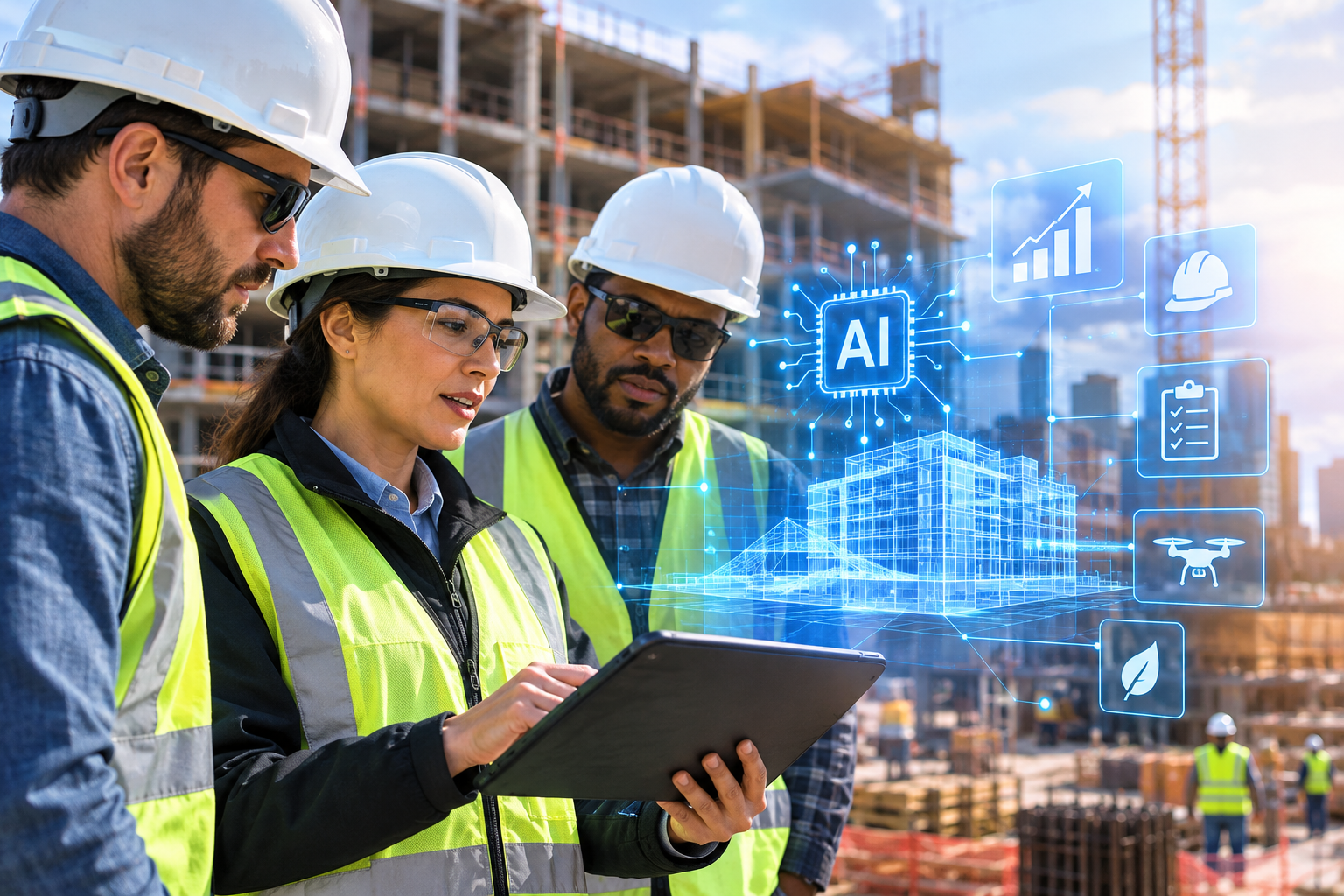
Artificial intelligence is changing how major construction projects are planned, designed, staffed, and managed. For owners and developers, the opportunities are significant: shorter planning cycles, faster analysis, improved coordination, and earlier identification of potential risks.
Yet the industry is still in the initial stages of putting AI to work.
According to Bluebeam’s October 2026 AEC Technology Outlook Report 2027, only 28% of surveyed U.S. architecture, engineering, and construction firms have moved AI into production, and just 7% have integrated it across multiple core workflows.
The potential is clear, but so is the need for caution.
AI can do much of the heavy lifting. The challenge is knowing where human expertise must take over.
As we look toward 2027, owners and developers need to understand not only what AI can accomplish, but also that relying on it without experienced oversight can create serious problems.
Accelerating Project Schedules Without Compromising Execution
One of AI’s most promising applications is its ability to compress planning and scheduling timeframes.
AI-powered tools can analyze complex project schedules, identify potential conflicts, evaluate sequencing alternatives, and model the impact of changes much faster than traditional manual processes.
For a large commercial or multifamily development, this could mean evaluating multiple construction scenarios in hours rather than days.
However, an optimized schedule on a computer doesn’t necessarily translate into an achievable schedule in the field.
Labor availability, permitting, procurement lead times, site conditions, and subcontractor coordination all influence whether a proposed timeline is realistic.
AI may identify opportunities to shorten a schedule, but experienced construction professionals must determine whether those efficiencies are achievable without increasing risk.
For owners and developers, the objective should be better-informed scheduling decisions, not simply faster schedules.
Finding Qualified Workers: AI Can Identify Candidates, but People Must Make the Decisions
Workforce availability remains a critical consideration for major construction projects.
AI can help contractors and construction managers identify potential candidates, evaluate experience against project requirements, and streamline recruiting and workforce planning.
That can be particularly valuable when assembling teams for complex projects requiring specialized trades, technical expertise, or experienced project leadership.
But identifying a promising candidate is not the same as confirming that the individual is qualified. Credentials, licenses, safety records, relevant project experience, and references still require appropriate verification and human evaluation.
For owners and developers, the quality of the people executing the work remains far more important than the speed at which they are identified.
The 80/20 Problem: When AI Gets Most of It Right
AI is becoming increasingly useful in preparing and reviewing construction documents, specifications, reports, schedules, and preliminary design information.
It can organize complex information, produce initial drafts, identify inconsistencies, and support drawing coordination.
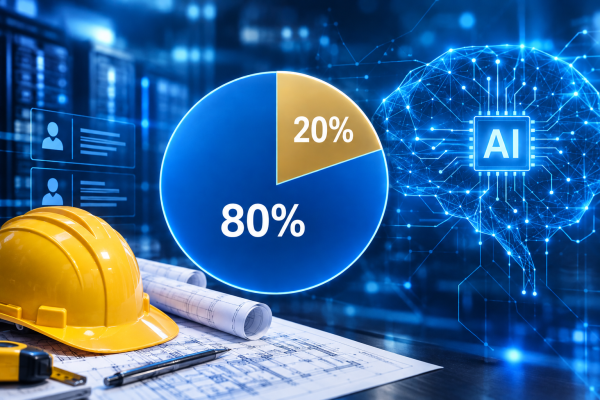
Consider a complicated project where AI produces 80% of an initial product. That may represent considerable time savings. But what happens if the remaining 20% contains critical errors?
An overlooked specification, incorrect dimension, missing code requirement, or poorly defined contractual obligation can create consequences far greater than the time saved preparing the document.
In construction, the final 20% isn’t necessarily a minor detail. It may be where the greatest financial and operational risks reside.
The 80/20 scenario is illustrative, but the underlying concern is real: AI-generated work should be treated as a starting point, not a finished professional deliverable.
Qualified architects, engineers, construction managers, and legal professionals must review and approve work within their respective areas of responsibility.
Who Is Using AI on Your Project—and Who Is Checking the Work?
Another important question is: How are your architects, engineers, contractors, and consultants using AI?
AI may already be supporting design development, cost estimating, subcontractor evaluations, scheduling, document preparation, or contract review.
These applications can deliver meaningful efficiencies. However, owners should understand where AI is being used, how the information is verified, and who remains accountable for the final work product.
Who is responsible when a civil drawing fails to identify key information or when a contractor’s AI-generated estimate overlooks a critical scope item?
Owners should consider establishing clear expectations with project partners regarding AI use, including appropriate disclosure, professional review, confidentiality protections, and contractual responsibilities.
Technology may change how work is performed, but it should not create uncertainty about who is responsible for the results.
7 Best Practices for AI In Construction:
- Establish clear boundaries. Identify which activities can benefit from AI and which require independent verification, professional review, and formal approval.
- Keep accountability with qualified professionals. AI can support analysis and recommendations, but responsibility for design, safety, contractual obligations, budgets, and execution must remain with the appropriate professionals.
- Know how your project partners are using AI. Establish expectations for architects, engineers, contractors, and consultants, including review procedures, confidentiality, and responsibility for AI-assisted deliverables.
- Protect confidential project information. Financial models, proprietary designs, contracts, bid information, and workforce data should only be used in AI systems with appropriate security and data-use protection.
- Verify before acting. AI-generated schedules, estimates, specifications, and technical recommendations should be checked against reliable project information, applicable requirements, and actual field conditions.
- Start with measurable applications. Focus on areas where AI can demonstrate value, such as document review, schedule analysis, risk identification, and project reporting. Measure results before expanding its use.
- Build oversight into project management. Establish who reviews AI outputs, how important decisions are documented, and when issues must be escalated. AI should strengthen existing project controls, not operate outside them.
Looking Ahead to 2027: How AI Will Change Construction
The next phase of AI in construction will be less about experimenting with individual tools and more about integrating the technology into everyday project delivery.
A July 2026 McKinsey analysis highlighted the potential for AI to streamline coordination, connect project information, and help professionals focus more time on decisions involving risk, cost, and execution.
These developments are worth watching:
- Predictive project management: Earlier identification of potential schedule delays, cost pressures, and coordination issues.
- Faster preconstruction and design analysis: More efficient evaluation of design alternatives, constructability, and preliminary cost and schedule scenarios.
- Smarter document and contract review: Faster analysis of large volumes of project information to identify inconsistencies, missing requirements, and potential exposures.
- Improved workforce and resource planning: Better forecasting of labor, equipment, and material needs across complex projects.
- More actionable project reporting: Consolidating information from multiple systems to give leadership a clearer view of performance and emerging risks.
The opportunity is substantial. Bluebeam’s 2026 research found that among firms already running AI in production, 64% reported greater cost predictability and 58% reported identifying project risks earlier.
But recognizing a problem and preventing it are two different things.
The companies that benefit most from AI won’t necessarily be those adopting the greatest number of tools. They’ll be the ones that integrate AI into disciplined management practices while maintaining clear accountability.
The Bottom Line: AI is a tool, not a substitute for experience. The goal is to use technology to make experienced professionals more effective.
Connect with Skyler at 940-366-2231or sblankenfeld@kbcmgroup.com to discuss how experienced construction management and owner representation can help protect your investment, manage risk, and keep your project moving forward.
Sources
- Bluebeam, 2027 Building the Future: AEC Technology Outlook Report, October 13, 2026.
- McKinsey & Company, How AI Is Reshaping the Future of the AEC Industry, July 15, 2026.